Raptorsauto · Calgary, AB
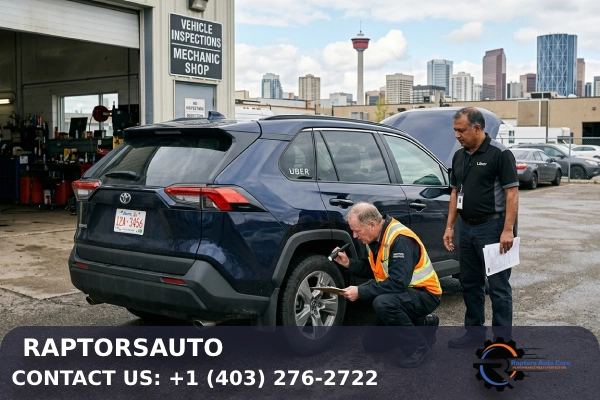
If you’re planning to drive for Uber in Alberta, the first thing standing between you and the road is a passing grade on your ELVIS inspection Calgary appointment.
This single inspection confirms your vehicle is mechanically sound, safe for passengers, and approved to carry paying riders. Skip it, and your driver account simply won’t activate.
Whether you’re brand new to rideshare driving or renewing an older vehicle, this guide walks through everything tied to the ELVIS inspection Calgary process — what the checklist covers, what it costs, how the paperwork flows, and how long your approval actually lasts.
Need a faster route through the process? Book your Uber inspection Calgary → appointment directly with our certified team and skip the guesswork entirely.
What Is ELVIS Inspection Calgary and Who Needs It?
Before you can pick up your first passenger, you need to understand what this inspection actually represents and why the city requires it.
The ELVIS inspection Calgary program exists specifically to protect riders by confirming that rideshare and livery vehicles meet a recognized safety standard before they’re allowed to operate commercially.
Unlike a routine oil change or seasonal tire swap, this inspection is tied directly to your ability to legally earn money as a driver.
Calgary treats commercial passenger transport differently than private driving, which is why the bar for passing is noticeably higher than a standard mechanical check.
Understanding this distinction early saves drivers a lot of frustration. Many new applicants assume any mechanic shop can sign off on the paperwork, only to discover Uber rejects results from facilities that aren’t formally licensed for this specific inspection type.

▸ What does ELVIS stand for in Calgary?
ELVIS stands for Enhanced Livery Vehicle Inspection Standards. It’s a formal mechanical and safety review designed specifically for commercial passenger vehicles, distinct from a basic out-of-province or used-car inspection you might be more familiar with.
The “enhanced” part of the name isn’t marketing language — it genuinely reflects a more rigorous checklist than what a private vehicle would ever go through. Every component tied to passenger safety gets extra scrutiny under this standard.
Knowing the full acronym also helps when you’re searching for the right facility or trying to confirm you’re looking at the correct document. Some shops list services under slightly different wording, so recognizing the full term avoids confusion at booking time.
▸ What is the ELVIS inspection full form?
The Elvis inspection calgary full form refers to the same Enhanced Livery Vehicle Inspection Standards designation mentioned above. Drivers often search this phrase simply trying to confirm the acronym matches what Uber is asking for in their app notifications — and it does.
It’s a common point of confusion because the name “ELVIS” sounds catchy enough that people assume it’s a nickname for something else. In reality, it’s the official terminology used across municipal bylaws and provincial rideshare regulations in Alberta.
If you ever see this term referenced on government paperwork, on Uber’s documentation page, or on an inspection facility’s invoice, you can be confident it’s pointing to this exact same process — there’s no separate or alternate version to worry about.
▸ Why does Uber require an ELVIS vehicle inspection?
Uber requires this check because municipal bylaws in Calgary mandate it for any vehicle used commercially to transport the public. It isn’t an optional extra Uber added on its own — it’s a legal requirement the platform must enforce to operate within city limits.
Beyond the legal obligation, the inspection reduces liability for everyone involved. A mechanically sound vehicle is less likely to break down mid-trip, less likely to cause an accident, and far less likely to put a rider in an unsafe situation.
It also protects drivers themselves. Passing a thorough inspection gives you documented proof that your vehicle was roadworthy at the time of approval, which can matter significantly if an incident or insurance claim ever comes up later in your driving career.
▸ Which drivers must complete an ELVIS inspection before driving for Uber?
Every driver registering a personal vehicle with Uber in Calgary for the first time must complete this inspection before their account becomes active. There are no exceptions made based on driving experience or how new the car happens to be.
✓ New Uber applicants — every first-time driver registering a personal vehicle.
✓ Drivers switching vehicles — anyone adding a new car to their Uber profile.
✓ Renewing drivers — once the previous inspection period has lapsed.
Even drivers who already passed once with a different vehicle have to start the process over again the moment they switch cars. Uber’s system ties the approval to the specific vehicle, not the driver’s profile alone, so each new car triggers a fresh review.
▸ How long is an ELVIS inspection valid in Calgary?
Most approvals stay valid for 12 months, though vehicle age can shorten that window in some cases. Older vehicles are sometimes required to re-inspect more frequently as part of ongoing safety compliance.
Tracking your ELVIS inspection expiry Calgary date is the easiest way to avoid an unexpected account suspension from Uber’s system. Many drivers get caught off guard simply because they didn’t mark the renewal date on a calendar.
A good habit is booking your renewal appointment two to three weeks before the expiry date. This gives you a buffer in case the inspection flags a repair issue, so you’re not scrambling to fix something the night before your approval lapses.
ELVIS Inspection Calgary Requirements for Uber Drivers
Passing your ELVIS inspection Calgary appointment starts with knowing exactly what Uber and the inspection facility expect from your vehicle and your paperwork before you even book the appointment.
A surprising number of failed first attempts come down to drivers simply not knowing the baseline eligibility rules. Reading through these requirements ahead of time can save you an entire wasted trip to the inspection facility.
The sections below break the requirements into manageable pieces — vehicle eligibility, paperwork, and the most common failure points — so you can walk in fully prepared.
▸ Uber ELVIS check requirements in Calgary
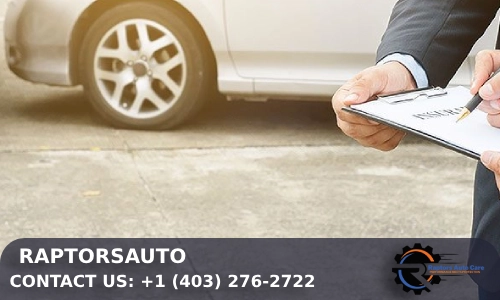
The Uber ELVIS check requirements cover vehicle age, typically under 12 years old, along with four functioning doors and a clean title with no salvage or rebuilt-status history attached to it.
Beyond the basics, the vehicle also needs to be free of major cosmetic damage, hold a valid registration in Alberta, and carry insurance coverage that explicitly permits ride-hailing or commercial passenger use.
These requirements exist because Uber’s platform itself performs an automated cross-check against your submitted documents. If even one detail doesn’t line up — like a mismatched VIN or an expired registration — your approval gets flagged for manual review.
▸ Vehicle eligibility standards for Uber drivers
Eligible vehicles must align with current Uber vehicle requirements Calgary guidelines, including minimum seating capacity and a model year that fits within Uber’s accepted range for the service tier you’re applying to.
Different Uber service tiers — UberX versus Uber Comfort, for example — sometimes carry slightly different vehicle standards. It’s worth double-checking which tier you’re registering for before assuming your car automatically qualifies.
Commercial vans, two-door coupes, and vehicles with permanently removed seating typically don’t meet eligibility, regardless of how well they pass the mechanical portion of the inspection.
▸ Documents required before the inspection
Showing up with incomplete paperwork is one of the most common reasons appointments get delayed or rescheduled entirely. Having everything ready in advance keeps your visit short and stress-free.
✓ Valid vehicle registration
✓ Proof of commercial or ride-hailing insurance
✓ Government-issued driver’s licence
It’s also smart to bring your Uber driver ID or partner number if you have one, since some facilities link that number directly to the inspection record for faster submission to Uber’s system.
▸ Common reasons vehicles fail an Uber inspection
Worn brake pads, cracked windshields, and bald tires top the list of common ELVIS inspection fail reasons Calgary drivers run into during their first attempt at the facility.
Burnt-out bulbs are another surprisingly frequent issue, simply because drivers don’t always notice when a brake light or signal stops working until someone points it out for them.
Interior wear matters too — torn upholstery, malfunctioning seat belts, or a missing headrest can all trigger a fail, even when the mechanical components of the vehicle are otherwise in excellent shape.
▸ How to prepare your vehicle before the inspection
A quick pre-check at home — checking tire tread, fluid levels, and dashboard warning lights — drastically improves your odds of passing the ELVIS inspection Calgary process on the very first visit.
Cleaning the interior thoroughly the night before also helps. Inspectors note overall condition as part of the checklist, and a tidy, odor-free cabin leaves a noticeably better impression during the review.
If you’ve noticed any warning light on your dashboard recently, it’s worth having it diagnosed before your appointment rather than hoping the inspector overlooks it — most facilities treat an active warning light as an automatic flag.
ELVIS Inspection Calgary Checklist: What Inspectors Actually Check
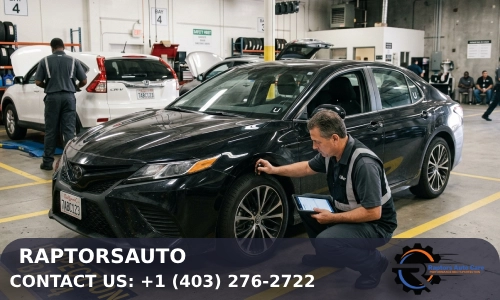
Here’s the full mechanical and safety checklist technicians work through during your ELVIS inspection Calgary appointment. Knowing what’s coming removes a lot of the guesswork and anxiety drivers feel walking into their first inspection.
Each category below represents a distinct part of the checklist, and a fail in any single category is usually enough to hold up your overall approval until it’s corrected and verified.
Technicians typically move through these in a consistent order, starting underneath the vehicle and working outward to the cabin and exterior, so nothing gets missed along the way.
Pad thickness, rotor condition, and fluid leaks.
Tread depth, sidewall damage, and matching sizes.
Alignment, shocks, and play in the wheel.
Headlights, brake lights, and turn signals.
No major cracks within the driver’s sightline.
Functioning belts in every seating position.
Cleanliness and visible body damage.
Frame integrity and engine performance.
▸ Brake system inspection
Brakes get some of the closest attention during the entire checklist, since they’re the single most safety-critical system on the vehicle. Technicians measure pad thickness against a minimum tolerance and inspect rotors for excessive wear or warping.
Brake fluid is also checked for proper levels and any visible signs of leakage along the lines. A spongy pedal feel during the test drive is usually enough to flag the system for further review.
Parking brake function gets tested as well, since it’s a separate mechanism that some drivers rarely use and don’t realize has stopped working properly until an inspector points it out.
▸ Tires and wheel condition
Tread depth gets measured at multiple points across each tire to confirm it meets the minimum legal requirement for safe traction, especially given Calgary’s unpredictable winter conditions throughout much of the year.
Sidewalls are checked for bulges, cracking, or any damage that could indicate a structural weakness, since these issues often aren’t visible from a quick glance at the tread alone.
Mismatched tire sizes across axles, along with improperly torqued lug nuts, are also flagged during this portion of the review and need to be corrected before approval is granted.
▸ Steering and suspension components
Excessive play in the steering wheel is one of the first things a technician checks, since it can point to worn linkage or a failing rack-and-pinion system that affects overall vehicle control.
Shocks and struts are inspected for leaks and bounce-back behaviour during the test drive, both of which signal how well the vehicle will handle sudden braking or uneven road surfaces.
Ball joints and bushings round out this section, since worn components here can create a noticeable clunking sound and gradually compromise the vehicle’s overall stability at higher speeds.
▸ Lights, signals, and visibility equipment
Every exterior light gets tested individually — headlights, brake lights, reverse lights, and turn signals all need to function correctly on both sides of the vehicle without exception.
Hazard lights are checked as a separate system, since they share circuitry with the turn signals but need to function independently in an emergency situation on the road.
License plate illumination is a small detail that’s frequently overlooked by drivers but still counts as part of this category, so it’s worth a quick check before your appointment.
▸ Windshield and mirror requirements
Any crack that falls within the driver’s direct line of sight is treated as an automatic fail, even if the rest of the windshield is otherwise in good condition.
Both side mirrors and the rearview mirror need to be securely mounted and free of cracks that would distort the driver’s view of surrounding traffic or pedestrians.
Excessive tint on the windshield or front windows beyond Alberta’s legal limit can also cause a fail, since it directly affects visibility for both the driver and approaching officers.
▸ Seat belts and safety equipment
Every seating position in the vehicle needs a fully functional seat belt, since Uber vehicles are expected to safely accommodate the maximum number of passengers the car is rated for.
Inspectors test the retraction and latching mechanism on each belt individually, looking for fraying, stiffness, or any buckle that doesn’t click securely into place on the first try.
Headrests are checked as part of this category too, since a missing or broken headrest in any seating position is considered a safety gap during a collision.
▸ Interior and exterior vehicle condition
Beyond pure mechanics, inspectors also evaluate the overall cleanliness and presentation of the vehicle, since Uber expects every approved car to offer a reasonably comfortable rider experience.
Significant body damage, large dents, or mismatched paint panels from a poor repair job can all factor into the exterior portion of the review, even when they don’t affect drivability.
Strong odors, visible stains, or torn upholstery inside the cabin are flagged as well, since these details directly shape how a passenger rates their trip after the fact.
▸ Mechanical and structural safety checks
The final category covers the engine, exhaust system, and overall frame integrity of the vehicle, confirming there’s no rust-through, leaking fluid, or structural damage from a prior collision.
Exhaust leaks are taken particularly seriously, since they can allow carbon monoxide into the cabin — a genuine safety hazard for both the driver and any passengers riding along.
Technicians also do a brief test drive as part of this section, listening for unusual noises and confirming the vehicle accelerates, brakes, and handles the way it should under normal conditions.
ELVIS Inspection Calgary Cost: How Much Should You Expect to Pay?
Pricing is one of the first questions every new driver asks, and for good reason — knowing the cost upfront helps you budget for the entire onboarding process before your first paycheque arrives.
While the ELVIS inspection Calgary price varies somewhat between facilities, the range tends to stay fairly consistent across the city, with only modest differences based on convenience and turnaround time.
Below, we break down the typical pricing, what affects it, and how to avoid overpaying without sacrificing the quality or reliability of your inspection.
▸ Average ELVIS inspection Calgary price
The typical Elvis inspection calgary price ranges from roughly $80 to $150, depending on the facility and your vehicle’s overall complexity, including how many systems need a detailed look.
Newer, well-maintained vehicles often land toward the lower end of that range, since technicians spend less time diagnosing potential issues compared to an older or higher-mileage vehicle.
Some facilities also bundle the inspection with minor adjustments at no extra charge, which can make a slightly higher quoted price worth it in the long run.
▸ Vehicle inspection Calgary cost comparison
When comparing Vehicle inspection Calgary pricing across shops, look beyond the sticker price — turnaround speed and Uber-form accuracy matter just as much as the dollar amount on the invoice.
A shop quoting the lowest price isn’t always the fastest, and a delay of even a few days can cost a new driver far more in lost earning potential than the savings on the inspection itself.
It’s worth reading recent reviews specifically from rideshare drivers, since their experience with the paperwork side of things tends to be more relevant than a general automotive review.
▸ Factors that affect inspection pricing
A handful of variables influence what you’ll actually pay at the counter, and understanding them ahead of time helps you avoid any surprises when the final invoice comes through.
✓ Vehicle make, model, and age
✓ Same-day versus scheduled appointments
✓ Whether minor repairs are bundled in
Facilities located closer to downtown sometimes charge a small premium over suburban shops, simply due to higher demand and overhead, though the difference is rarely dramatic.
▸ Re-inspection fees after a failed inspection
Most facilities charge a reduced re-inspection fee once the flagged repairs are completed, rather than billing you the full price again for a complete second review.
This reduced fee typically only covers a re-check of the specific items that failed the first time, not a full top-to-bottom inspection of the entire vehicle once more.
It’s worth asking about this policy before booking your original appointment, since not every facility handles re-inspection pricing the same way, and the difference can add up.
▸ Is the cheapest inspection always the best option?
Not necessarily. A low ELVIS inspection Calgary fee means little if the facility isn’t properly licensed or the paperwork ends up getting rejected by Uber’s review team.
A rejected form means you’re paying twice — once for the original inspection, and again for a correct one at a different, properly licensed facility.
Choosing a slightly more expensive but reliable facility almost always works out cheaper in total time and money once you factor in the risk of a rejected submission.
ELVIS Inspection Calgary Form: How to Complete the Required Documents
The paperwork side of the process trips up just as many drivers as the mechanical inspection itself, so it’s worth understanding exactly how the documentation works before your appointment.
A properly completed ELVIS inspection Calgary form is the single document that bridges your physical inspection and your digital approval inside the Uber Driver app.
Below, we cover where this form comes from, how it’s filled out, and the small mistakes that cause an otherwise passing inspection to get rejected on submission.
▸ ELVIS form Calgary explained
The ELVIS form Calgary document records every checklist item, the technician’s certification number, and a pass or fail outcome for each individual category covered during the inspection.
It also includes the vehicle’s VIN, license plate, and the exact date of inspection, all of which Uber cross-references against your account details before granting final approval.
Think of this form as your official proof of compliance — without it, none of the mechanical work you did to prepare your vehicle counts for anything in Uber’s eyes.
▸ Where to get the official ELVIS inspection form
Licensed facilities issue the form directly after your ELVIS inspection Calgary appointment — you don’t need to source it separately from a government office or download it yourself.
Some drivers mistakenly try to find a blank version of the form online to fill out themselves, but it only carries weight when issued and signed directly by a licensed technician.
If a facility tells you to print and complete your own form, that’s a strong signal to look elsewhere for a properly licensed inspection provider instead.
▸ How inspectors complete the ELVIS vehicle inspection form for Uber
Technicians fill out the Elvis vehicle inspection form uber requires line by line, working through every checklist category and recording a clear pass or fail next to each one.
Once every section is complete, the technician signs the form and stamps it with the facility’s official licence number, which is what Uber’s system checks against during review.
You’ll receive either a printed copy or a digital version, depending on the facility’s process, and both formats are equally valid for submission to Uber.
▸ Common mistakes when submitting inspection forms
Even a perfectly passed inspection can get rejected at the submission stage if the uploaded document isn’t clear or complete enough for Uber’s review team to verify.
✕ Blurry photo uploads
✕ Missing signature or stamp
✕ Submitting an expired form
Taking a moment to photograph the form in good lighting, with all four corners visible, drastically reduces the chance of a rejection and a frustrating resubmission.
▸ How to upload your completed ELVIS form to Uber
Open the Driver app, go to your documents tab, and upload a clear photo or scan of your completed ELVIS inspection Calgary form for review by Uber’s compliance team.
Make sure the document type is correctly selected before uploading, since choosing the wrong category can delay processing even if the file itself is perfectly readable.
After uploading, you’ll typically see a “pending review” status in the app, which updates automatically once Uber’s system or support team finishes verifying your submission.
ELVIS Inspection Calgary vs Standard Vehicle Inspection Calgary
A lot of drivers assume any vehicle inspection will satisfy Uber’s requirements, but that’s one of the most costly misunderstandings in the entire onboarding process.
Understanding how the ELVIS inspection Calgary standard differs from a regular safety check helps you avoid wasting time and money on the wrong type of appointment.
The comparisons below cover exactly where the two diverge, and when you might genuinely need both completed for your specific situation.
▸ Key differences between ELVIS and regular inspections
A standard inspection checks basic roadworthiness — the kind of review you’d get for a used-vehicle purchase or an out-of-province registration transfer.
ELVIS adds commercial-grade scrutiny on top of that baseline, aimed specifically at passenger safety in a vehicle that will carry strangers on a daily basis.
The paperwork itself looks different too — a standard inspection report won’t include the specific certification language Uber’s system is programmed to recognize and accept.
▸ Which inspection does Uber actually accept?
Uber only accepts results from a recognized ELVIS inspection Calgary facility — a generic mechanic’s safety check won’t satisfy the platform’s requirement, no matter how thorough it was.
This is true even if your regular mechanic is highly trusted and has serviced your vehicle for years — without the specific ELVIS licensing, their paperwork simply won’t be accepted.
Always confirm a facility’s ELVIS licensing status before booking, rather than assuming any inspection sticker on your windshield will automatically transfer over to your Uber documents.
▸ Safety inspection vs rideshare inspection requirements
Rideshare inspections also assess interior cleanliness and door function — details a typical safety inspection often skips entirely since they don’t affect basic roadworthiness.
Seating capacity verification is another rideshare-specific element, confirming the vehicle can actually seat the number of passengers Uber’s app advertises to riders.
In short, think of a standard inspection as the floor, and the rideshare-specific checklist as the additional layer built on top of that foundation.
▸ When do you need both inspections?
If your vehicle is older or recently imported, some owners complete a related Mechanical Fitness Assessment Alberta alongside the ELVIS process for full provincial compliance.
Vehicles transferred from another province often need this additional assessment before Alberta will even issue a valid registration, regardless of their rideshare plans.
If you’re unsure whether your specific vehicle history requires both, a licensed inspection facility can usually tell you within a few minutes based on your registration documents.
ELVIS Inspection Calgary: Licensed Inspection Facilities and Approval Process
Not every garage in Calgary is authorized to perform this specific inspection, which makes choosing the right facility one of the most important decisions in the entire process.
A properly licensed ELVIS inspection Calgary provider has direct experience submitting paperwork that Uber accepts without delay, which can save you days of back-and-forth.
Below, we explain how to identify a licensed facility, what happens after your inspection, and how long the final approval typically takes.

▸ What is a licensed ELVIS inspection facility Calgary?
A licensed ELVIS inspection facility Calgary is a shop formally authorized by the city to issue valid inspection results that Uber’s compliance system will accept without question.
These facilities employ certified technicians who’ve completed the specific training required for commercial passenger vehicle inspections, beyond standard automotive certification.
You can usually confirm a facility’s licensing status by asking directly or checking for posted certification documents visible at the shop itself.
▸ Why choosing an approved facility matters
An unapproved shop’s paperwork gets rejected automatically, delaying your ELVIS inspection Calgary approval by days or even weeks while you scramble to redo the entire process.
This delay translates directly into lost earning time, since you can’t accept ride requests until Uber confirms your documentation is fully approved.
Choosing an approved facility from the start is simply the most reliable way to avoid this entirely preventable setback in your onboarding timeline.
▸ How the approval process works after inspection
Once your form is uploaded, Uber’s compliance team cross-checks the facility licence number and inspection date against its internal records before issuing approval.
If everything matches and the form is clearly legible, the approval typically moves through automatically without requiring any manual intervention from Uber’s support staff.
In rare cases where additional verification is needed, you may receive an in-app message requesting a clearer photo or additional documentation to complete the review.
▸ How long Uber approval usually takes
Most drivers see approval within 24 to 72 hours after submitting a complete ELVIS inspection Calgary form through the Driver app’s documents section.
Submissions made during busier periods, such as right before a long weekend, can occasionally take a little longer simply due to higher review volume.
If you haven’t heard back after a full week, it’s worth reaching out to Uber support directly to confirm your documents were received and are actively in queue.
▸ What happens if your vehicle fails inspection?
You’ll receive a clear list of flagged items directly from the technician, outlining exactly what needs to be repaired before the vehicle can pass.
Once those repairs are completed, you simply return to the same facility for a quicker, lower-cost re-inspection focused only on the previously flagged items.
There’s no penalty or waiting period for failing — drivers can return as soon as the repairs are finished, sometimes the very same day.
ELVIS Inspection Calgary for New Uber Drivers: Step-by-Step Process
If you’re starting from scratch, it helps to see the entire journey laid out from beginning to end, rather than piecing it together from scattered information.
The ELVIS inspection Calgary requirement is just one part of a broader onboarding sequence, and understanding where it fits helps you plan your timeline realistically.
Here’s the full process most new drivers go through, from initial signup to receiving final clearance to start accepting trips.
Registering as an Uber driver
Create your profile through Uber’s website or app, then submit your driver’s licence and consent to a background check as the first formal step. This stage typically takes a few business days to process, so it’s worth starting registration well before you actually need to begin driving. Once your background check clears, the app will prompt you to add vehicle documentation, including the inspection requirement covered throughout this guide.
Booking your inspection appointment
Choose a licensed shop offering same-day or next-day slots, particularly if you’re hoping to start earning as quickly as possible after registration. Calling ahead to confirm availability and confirming the facility’s licensing status takes only a couple of minutes and prevents a wasted trip across the city. Many shops now allow online booking directly through their website, which is often the fastest way to lock in a convenient appointment time.
Completing the vehicle inspection
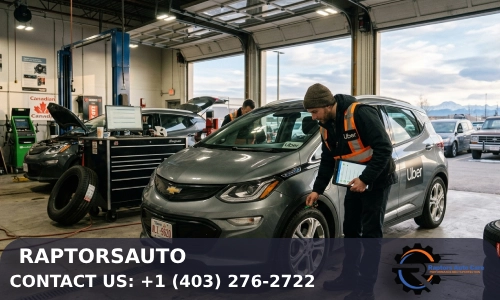
Sit through the checklist, typically 30 to 45 minutes, while the technician works through every category from brakes to lighting to interior condition. You’re usually welcome to wait on-site, and many facilities offer a small waiting area with seating while the inspection is underway. Once finished, the technician walks you through any flagged items, if applicable, before handing over your completed and signed inspection form.
Submitting documents to Uber
Upload your signed ELVIS form through the Driver app’s documents tab as soon as possible after leaving the inspection facility. Double-check the photo quality before submitting, since a blurry or partially cropped image is one of the most common reasons for a delayed review. Once submitted, your document status will update to “in review,” and you can track its progress directly within the app.
Receiving final driver approval
Get notified once your ELVIS inspection Calgary result clears review, at which point your account status updates and you’re free to go online and accept trips. This notification usually arrives as both an in-app banner and an email, so it’s worth checking both if you’re anxiously waiting on approval. From this point forward, your only ongoing responsibility is tracking your renewal date so the same process doesn’t catch you off guard a year from now.
ELVIS Inspection Calgary FAQs
Here are the most common questions Calgary drivers ask us about the inspection process, pulled directly from real conversations with new and renewing Uber drivers.
Generally once a year, though vehicles closer to the maximum age limit may require more frequent checks depending on their overall condition. Always check your specific expiry date in the Driver app rather than assuming a flat 12-month rule applies to every vehicle equally. Setting a calendar reminder a few weeks before expiry is the simplest way to stay ahead of the renewal deadline.
No. Uber locks vehicle activation until a passing inspection result is on file and verified through your documents tab. Attempting to go online before approval simply won't work — the app blocks access to trip requests automatically.
This is a hard requirement with no exceptions, regardless of how urgently you need to start earning.
Most appointments wrap up in well under an hour at a busy, well-staffed facility with same-day capacity. Vehicles needing a re-check for previously flagged items often take even less time than a first-time inspection. Booking ahead rather than walking in unannounced usually shortens your total wait time considerably.
Only if it falls within the valid 12-month window; expired reports are automatically rejected by Uber's system. A report from a different vehicle also won't transfer, even if it's still technically within the valid date range. When in doubt, simply book a new inspection rather than risk a rejected submission and lost time.
Four-door vehicles under roughly 12 years old with a clean title and valid registration typically qualify for the platform. Specific seating and model-year requirements can vary slightly by service tier, so it's worth confirming your exact tier first.
Salvage-titled or rebuilt-status vehicles are generally excluded regardless of how well they otherwise perform on inspection.
You'll get a rejection notice explaining the issue — usually a missing signature or unreadable scan — and can resubmit right away. There's no need to repeat the physical inspection itself, only the document submission step needs correcting. If the rejection reason is unclear, contacting Uber support directly usually clarifies exactly what needs fixing.
Yes — many Calgary facilities, including ours, offer same-day appointments for drivers on a tight timeline. Calling ahead is still recommended, since same-day slots can fill up quickly during busier periods of the week. Arriving with a clean, well-prepared vehicle also speeds up the same-day process considerably.
Book Your ELVIS Inspection Calgary Today
Ready to get on the road? Our team handles every part of the ELVIS inspection Calgary process so you don’t have to chase paperwork or guess at requirements on your own.
From the moment you walk in, our certified technicians work efficiently through the full checklist, flag anything that needs attention, and hand you a properly completed form ready for upload.
At Raptorsauto Repair, we’ve helped hundreds of Calgary drivers get approved quickly, and we’re ready to do the same for you—whether it’s your first inspection or a routine renewal.
No week-long waitlists, even during busy periods.
Transparent, upfront costs with no hidden fees.
Fully licensed for commercial rideshare inspections.
Completed correctly, every signature and stamp included.
Walk out ready to accept rides, with a complete, accurate inspection record behind you and nothing left to chase down. Let us handle the details so you can focus on what actually matters — getting back on the road.